
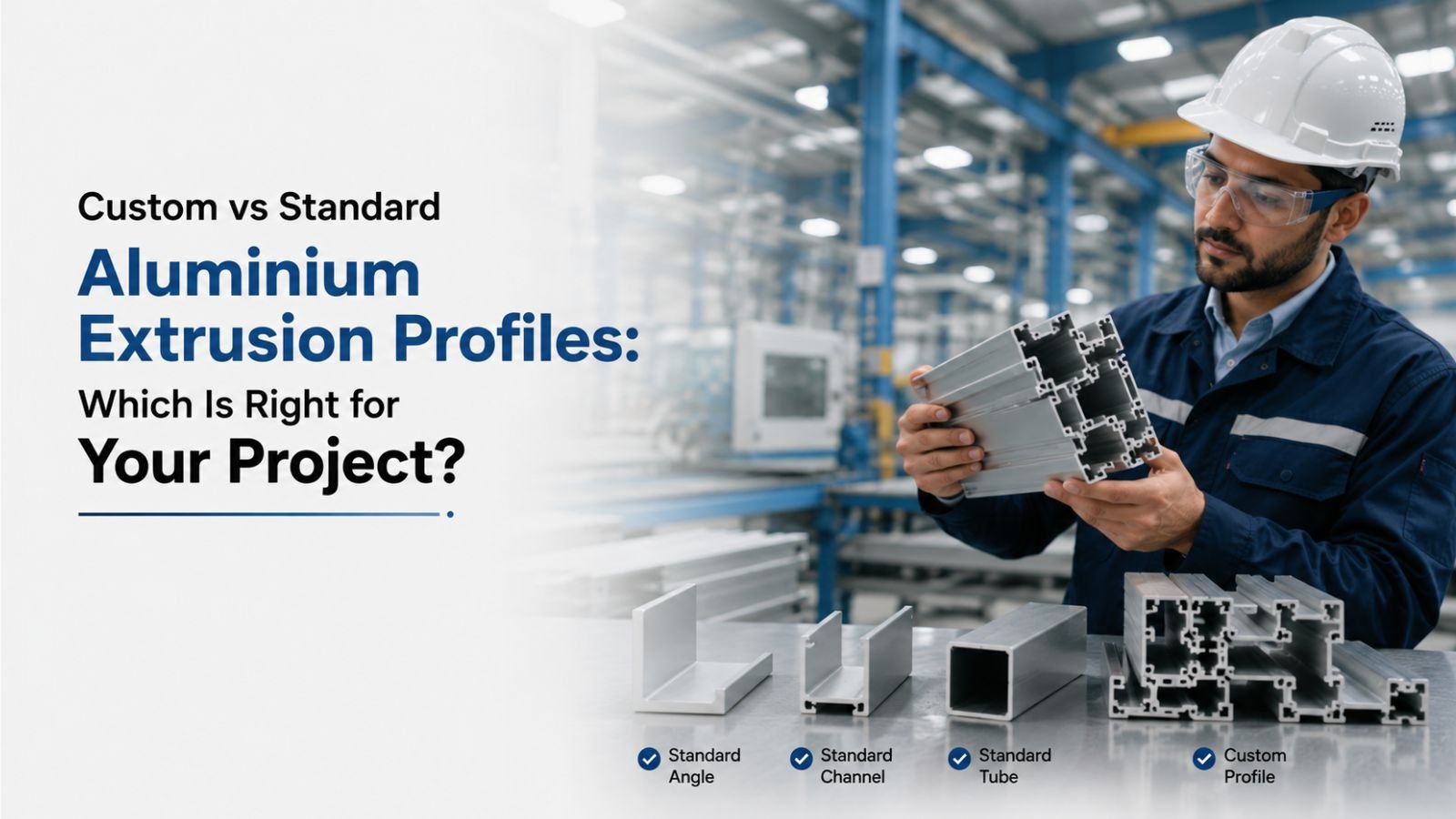
Choosing between a standard aluminium section and a custom-designed extrusion is one of the most consequential decisions in product development — it ripples through cost, lead time, manufacturability, assembly labour, inventory, and long-term profitability. Yet a lot of teams make the call based on gut feeling rather than a structured comparison. This guide lays out exactly how to make that decision properly, drawing on established extrusion-design guidance from industry bodies including the Aluminum Extruders Council and the Aluminium Extrusion Manual published by Australia's aluminium industry council.
What Are Standard Aluminium Profiles?
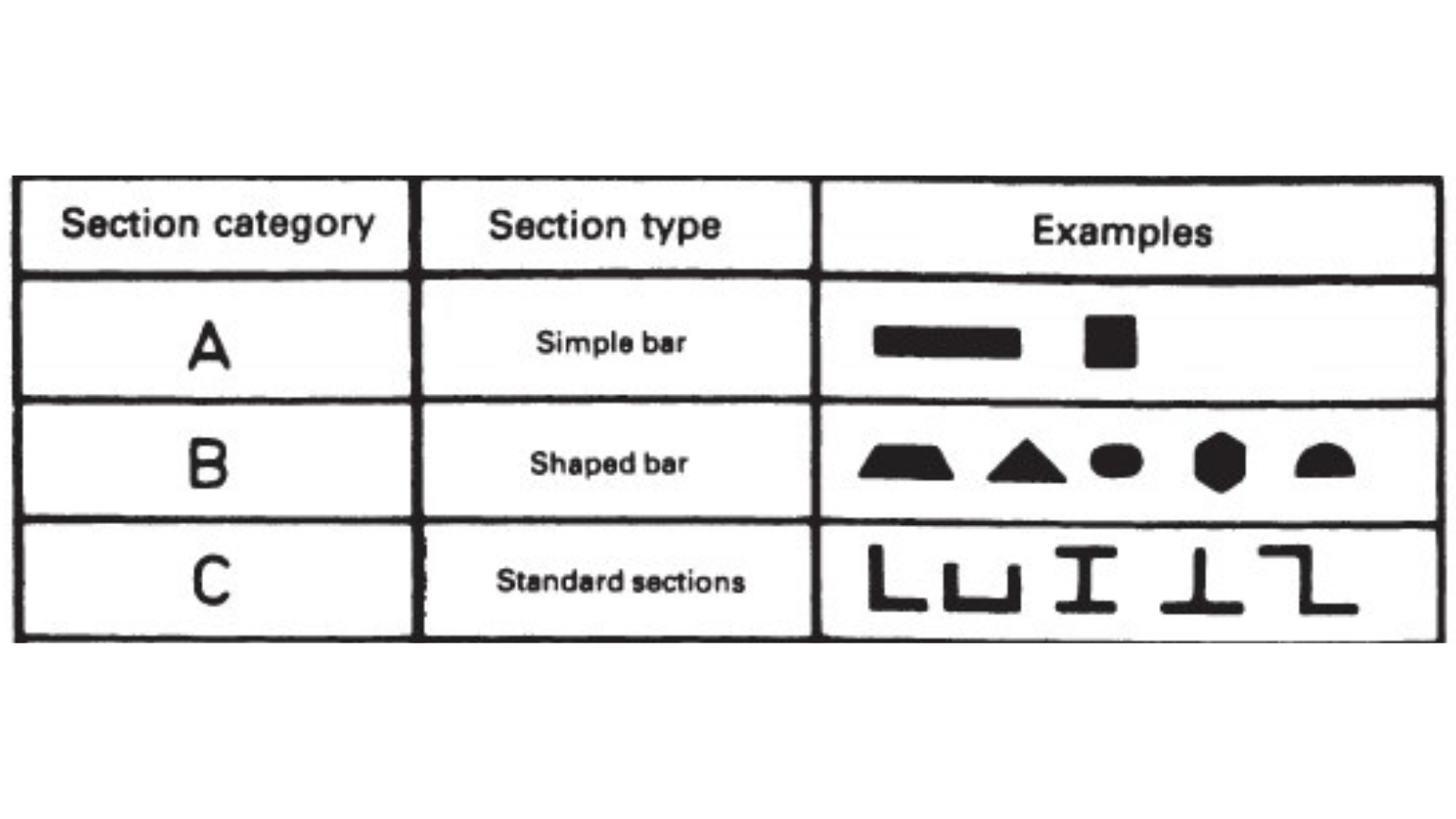
Standard profiles are pre-existing extrusion shapes produced from dies that already exist — no new tooling, no design lead time, production can start immediately. Typical standard shapes include:
- Equal and unequal angles
- Channels
- Flat bars, round bars, square bars
- Round tubes, square tubes, rectangular tubes
- T-sections, U-sections, Z-sections
These shapes are widely used precisely because they're inexpensive and immediately available from multiple suppliers.
What Are Custom Aluminium Extrusion Profiles?
A custom profile is designed specifically for one application — instead of picking an existing section, an engineer designs an entirely new cross-section that combines several functions into a single extrusion. Common custom applications include window and door systems, curtain wall profiles, heat sinks, solar mounting rails, EV battery enclosures, LED housings, industrial machine frames, conveyor systems, and automotive crash members. Every custom profile requires a new extrusion die before production can begin.
Standard vs Custom, at a Glance
| Feature | Standard profile | Custom profile |
|---|---|---|
| Tooling cost | None | New die required |
| Initial investment | Very low | Higher |
| Lead time | Fast | Longer (die design + trial) |
| Availability | Often immediate/stocked | Manufactured to order |
| Design flexibility | Limited | Very high |
| Assembly | Often needs multiple components | Can combine multiple functions |
| Machining | Usually more | Often reduced |
| Long-term unit cost | Can end up higher at volume | Often lower at volume |
| Best for | Low volume, prototypes | Medium-to-high volume production |
A Step-by-Step Decision Process
Step 1 — Define your product
Is this a one-time project, or will it be mass produced? Does it require genuinely unique functionality? If the answer to "unique functionality" is no, a standard section may well be sufficient — move on. If yes, continue.
Step 2 — Check existing standard sections first
Before designing anything new, review what's already available. Can a standard angle, tube, or channel do the job with little or no modification? Established extrusion-design guidance consistently recommends this as the first move — a standard section that fits is always the fastest, cheapest route.
Step 3 — Estimate production volume
Medium quantities → compare total manufacturing cost carefully — this is where the decision gets genuinely close.
Large quantities → custom profiles often become the economical choice, because tooling cost gets spread across many more parts.
Step 4 — Evaluate assembly impact
Ask whether one custom extrusion could replace welded assemblies, brackets, fasteners, or separately machined plates. If yes, a custom profile can cut manufacturing time, inventory complexity, assembly labour, and error rate — because extrusion lets you place material only where it's actually needed and integrate multiple features into one continuous shape.
Step 5 — Calculate total cost, not just extrusion price
Compare tooling cost, material cost, machining, welding, assembly labour, inventory carrying cost, maintenance, scrap rate, and final product weight — not just the per-metre extrusion quote. Many custom profiles turn out cheaper over the full product lifecycle despite a higher upfront tooling cost.
Advantages of Standard Profiles
- No tooling cost — ideal for startups, prototypes, and small projects
- Immediate availability — most standard sections are already stocked
- Lower initial investment — ideal on a limited budget
- Broad supplier availability — many suppliers make the same standard sections, reducing supply-chain risk
- Easy repairs — replacement stock is usually simple to source
Limitations of Standard Profiles
- Limited design freedom
- More machining typically required
- Extra brackets and fasteners
- More welding and assembly time
- More inventory line items to manage
Add all of this up across a large production run, and total manufacturing cost can end up exceeding what a custom extrusion would have cost.
Advantages of Custom Profiles
- Designed for the exact application — performs precisely as intended, nothing forced to fit
- Reduced assembly — one extrusion replaces multiple fabricated components
- Less machining — features like screw bosses, cable channels, grooves, mounting slots, snap-fit details and heat-dissipation fins can be extruded directly into the profile
- Lower product weight — material sits only where structural strength is actually needed, cutting aluminium consumption
- Cleaner appearance — fewer visible fasteners, more integrated look
- Higher manufacturing efficiency — fewer operations generally mean lower labour, faster assembly, and better repeatability run to run
Limitations of Custom Profiles
- Tooling investment required upfront
- Die development takes real time
- Genuine engineering effort needed to get the profile right
- Sample approval process adds a step before full production
- Poor economics for very small production runs
When Should You Choose Standard Profiles?
- Production quantity is low
- Budget is limited
- Delivery is urgent
- The design is simple
- An existing profile already meets the functional requirement
- You're still in prototype development
When Should You Choose Custom Profiles?
- Product volume is high enough to absorb tooling cost
- Assembly cost is a significant share of total product cost
- Weight reduction genuinely matters to the application
- Appearance and finish quality are important to the product
- Unique functionality is required that no standard shape provides
- Multiple separate components can be integrated into one profile
- Long-term manufacturing cost reduction is the actual goal, not just upfront price
Design Considerations for Custom Profiles
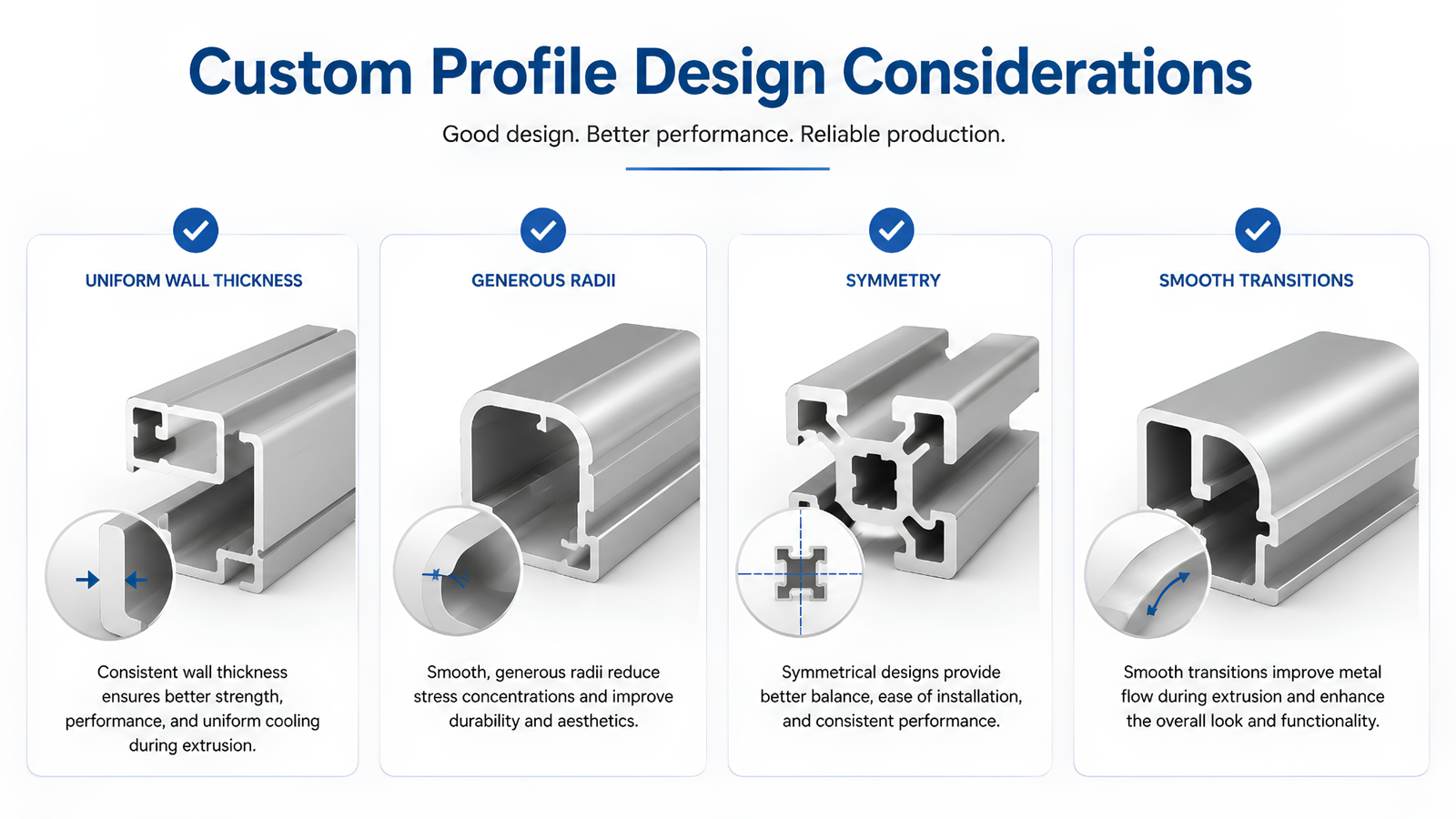
If you're moving toward a custom die, these design principles — drawn from established extrusion-design guidance — directly affect die cost, extrusion difficulty, and final part quality:
| Design principle | Why it matters |
|---|---|
| Keep wall thickness uniform where practical | Thick and thin zones extrude at different velocities — metal races through thick sections and starves thin ones, causing tearing, sink marks, or distortion. A commonly used guideline is keeping the ratio between adjacent wall thicknesses no greater than roughly 2:1. |
| Use generous corner radii | Sharp internal corners concentrate stress during extrusion, accelerating die wear and increasing crack risk. A frequently cited starting point is an internal radius of at least 0.5–1.0 times the local wall thickness; outside corners are typically kept above a small minimum radius rather than left perfectly sharp. |
| Keep the profile as symmetrical as possible | A symmetrical void reduces the risk of the die tongue breaking during production and generally eases metal flow balancing. |
| Control the tongue ratio | For semi-hollow and hollow sections, a high width-to-height ratio on a thin projecting "tongue" of die steel raises the risk of die breakage or incomplete metal fill. A commonly referenced starting rule is keeping this ratio around 3:1, or up to about 2:1 for the channel opening itself when generous radii are used at the channel base. |
| Use ribs and webs instead of adding bulk material | Ribs and webs add stiffness to wide, thin sections and help prevent twisting and flatness problems, without the weight and cost penalty of simply thickening the whole wall. |
| Mind circumscribing circle diameter (CCD) and weight per unit length | CCD is the diameter of the smallest circle that fully encloses the profile's cross-section — it determines which press size can produce it and strongly influences cost. A frequently cited target for the most economical production is keeping CCD under roughly 8 inches and weight under about 3 lb per foot, though larger, heavier profiles are certainly extrudable with the right press and process. |
Industries That Commonly Use Custom Profiles
- Building & construction
- Automotive
- Railway
- Aerospace
- Electrical & electronics
- Furniture
- Medical equipment
- Consumer products
- Renewable energy
- Industrial automation
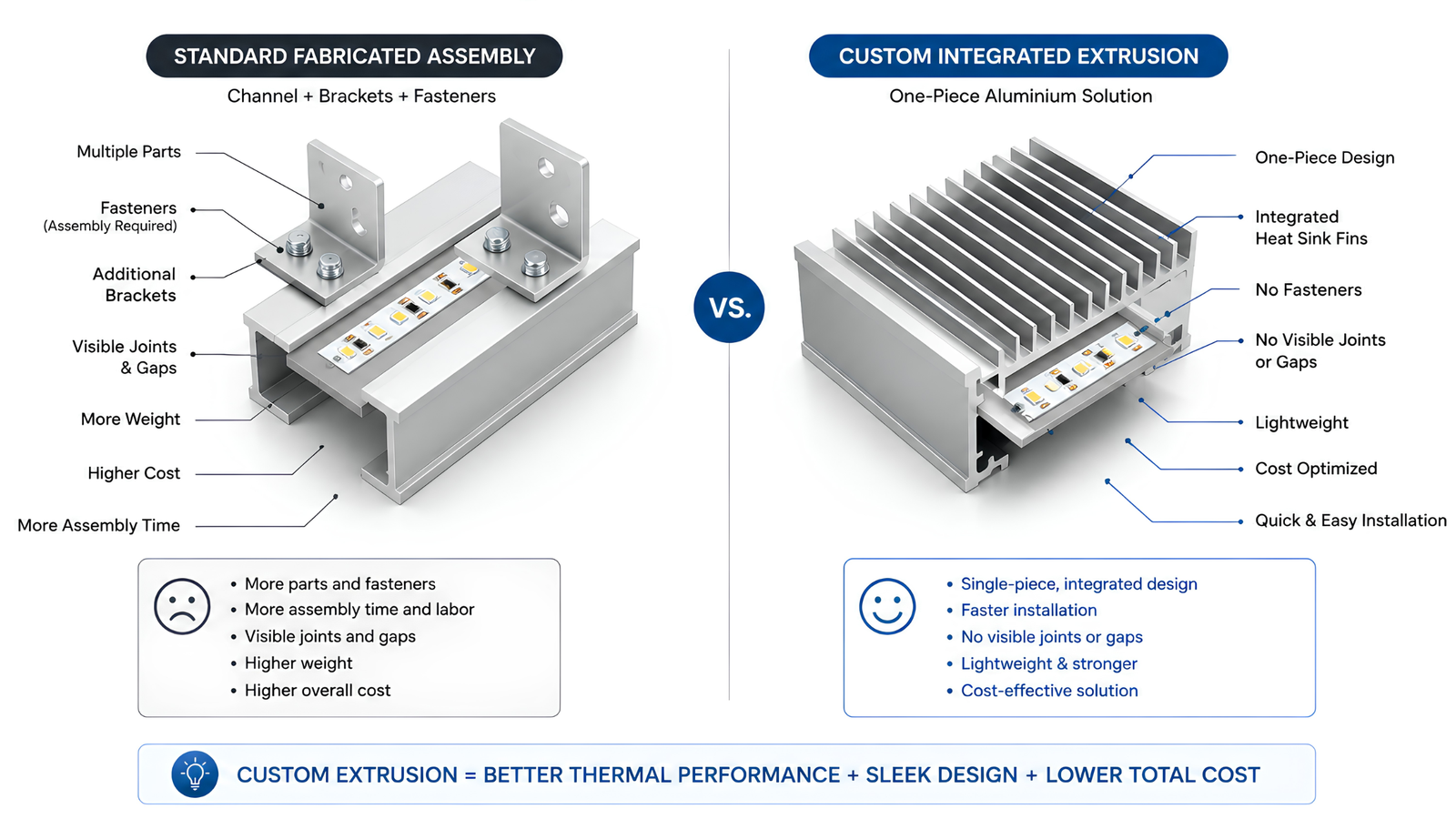
Real-World Example: Designing an LED Light Housing
| Option 1 — Standard profiles | Option 2 — Custom extrusion |
|---|---|
|
Buy a channel section Machine slots Drill mounting holes Add separate end plates Install brackets Result: more operations, more labour, higher assembly cost |
One extrusion integrates: LED mounting surface Heat-sink fins Wire channel Diffuser slot Mounting grooves Result: fewer parts, faster assembly, better appearance, lower long-term cost |
Decision Flowchart
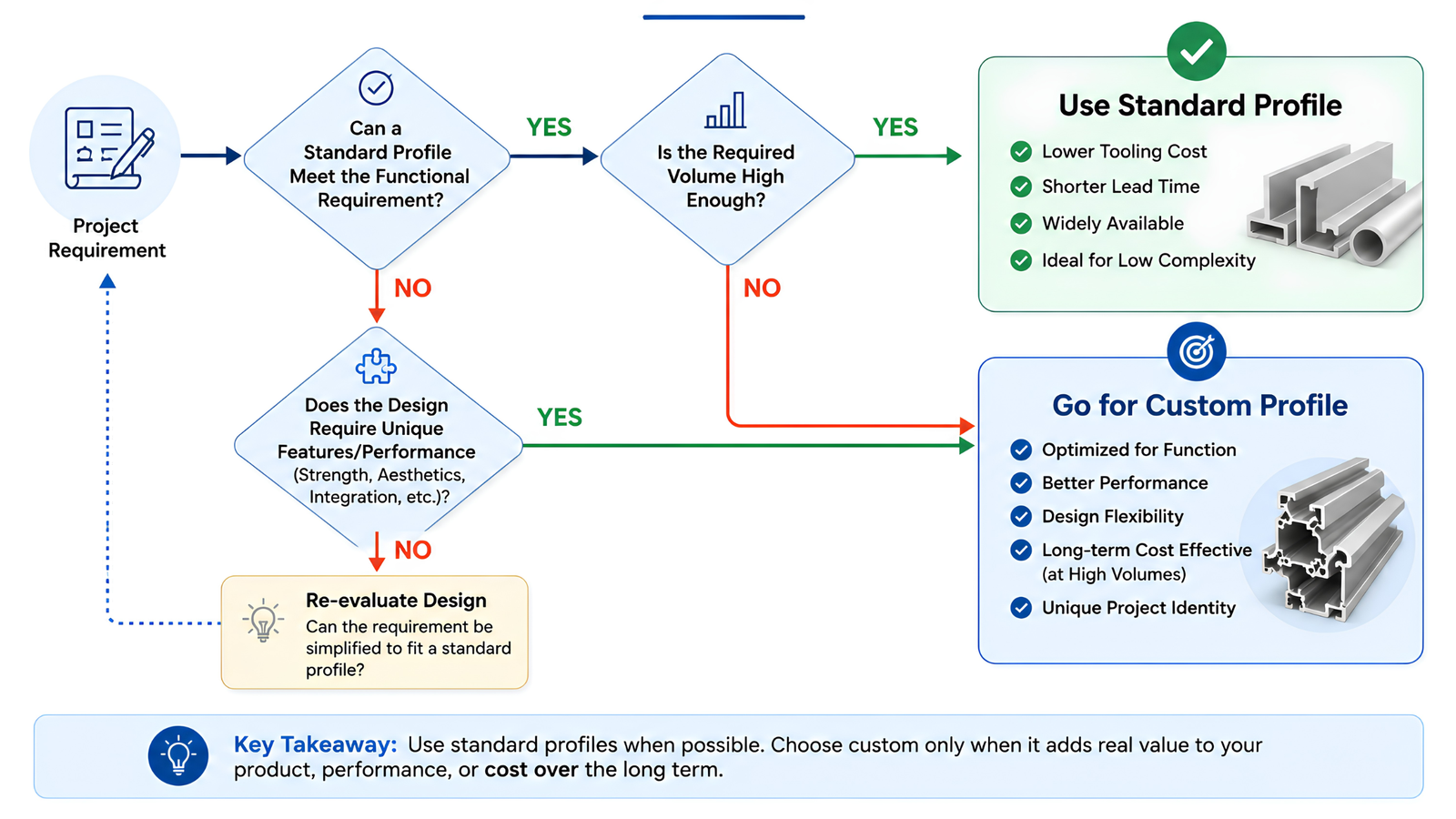
In short: check whether a standard profile can meet all functional requirements first. If it can and volume is low, use standard. If unique features are genuinely required, weigh production volume — high volume points to custom, low volume or prototype stage often means starting with standard for testing before committing to tooling.
Final Thoughts
There's no universal answer to standard vs custom — the right call depends entirely on your project's goals. Standard profiles are the right choice for prototypes, low-volume production, and projects where speed and low initial cost matter most. Custom profiles earn their tooling investment when performance, assembly efficiency, weight reduction, aesthetics, and long-term manufacturing savings justify it.
For many commercial products, a well-designed custom extrusion replaces multiple fabricated components, cuts machining and assembly work, and delivers a lower total cost across the product's lifecycle. The practical approach: always check whether a standard section can do the job first, and if it genuinely can't, work with your extrusion supplier to optimise a custom profile for manufacturability from the start — not after the first rejected sample.
References & Further Reading
- Aluminum Extruders Council — Extrusion Design Tips and Key Design Considerations (aec.org)
- Aluminum Extruders Council — FAQs on extrusion economics and tooling (aec.org)
- Australian Aluminium Council — Aluminium Extrusion Manual
- The Aluminum Association — standard tolerance references for extruded profiles